
Learn
Standalone and cumulative
Standalone isolates one expiration. For a later selected date, cumulative aggregates the eligible expirations through that date, excluding today. The same level names are derived from different sets of inputs.
Standalone Friday
Friday’s expiration only.
Cumulative through Friday
Tuesday + Wednesday + Thursday + Friday.
Standalone answers a question about one chain: today, a particular weekly, or the expiration containing an event. Cumulative provides context across expiration dates. Comparing the two can reveal whether a concentration is isolated to one date or remains prominent after aggregation.
If both maps put C1 and HVL in nearly the same place, the concentration is visible in both scopes. This is agreement within related inputs, not independent confirmation. If a wall changes rank or disappears after aggregation, other expirations have changed the combined distribution. The difference does not establish which level will control the session.
The same expiration, different inputs
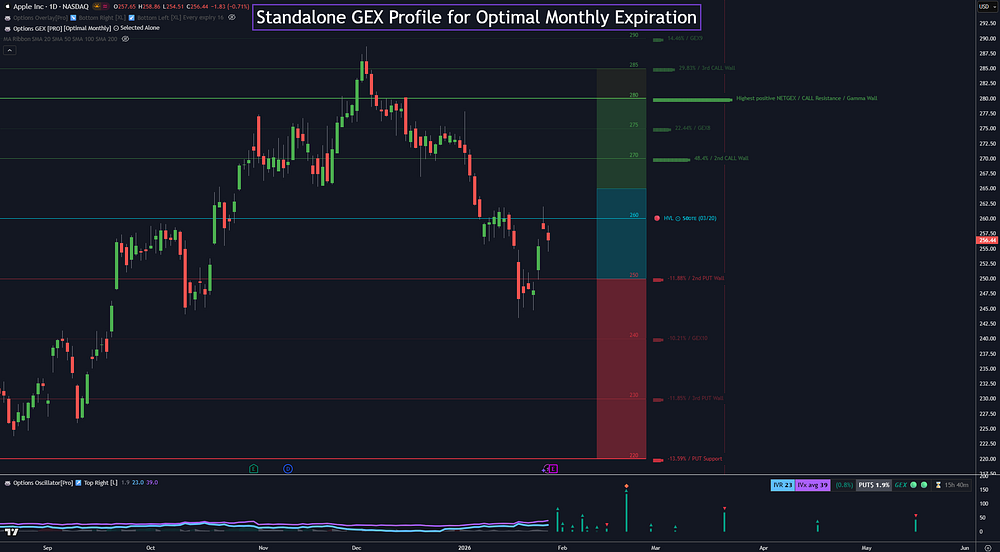
This saved TradingView chart isolates the March 20 expiration. Compare the profile with the cumulative chart below using the same date. Original article and full example.
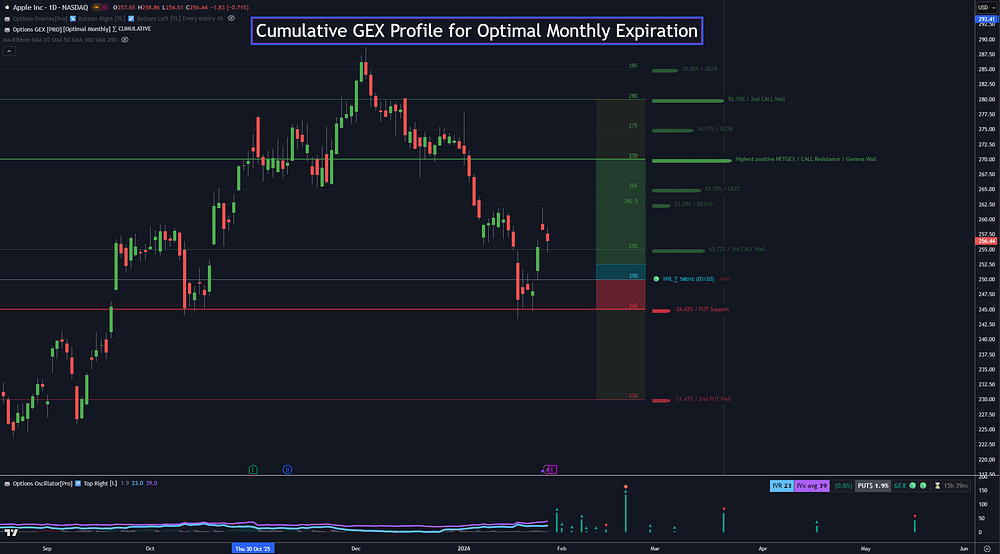
The cumulative view includes earlier eligible expirations through March 20. Extra exposure can change the dominant concentrations, even though the selected ending date is unchanged. Original article and full example.
Cumulative is aggregation across expiration dates at one snapshot time. It is not a history of how positioning developed. A larger cumulative total can be expected from additional inputs; it is not automatically a stronger forecast.
Where you see it
- Expirations
- GEX Matrix cumulative and standalone blocks
TanukiTrade documentation. Levels are context, not a recommendation. tanukitrade.com